How the Service Works

Referral

You can call us to refer your child to the Centre.

First Session

In this initial session, parents meet with one of our Support Workers. Children are accompanied to the service by a parent or guardian who waits in a separate room. On average children attend 6-8 sessions, although this varies depending on the individual needs of the child.


Subsequent Sessions

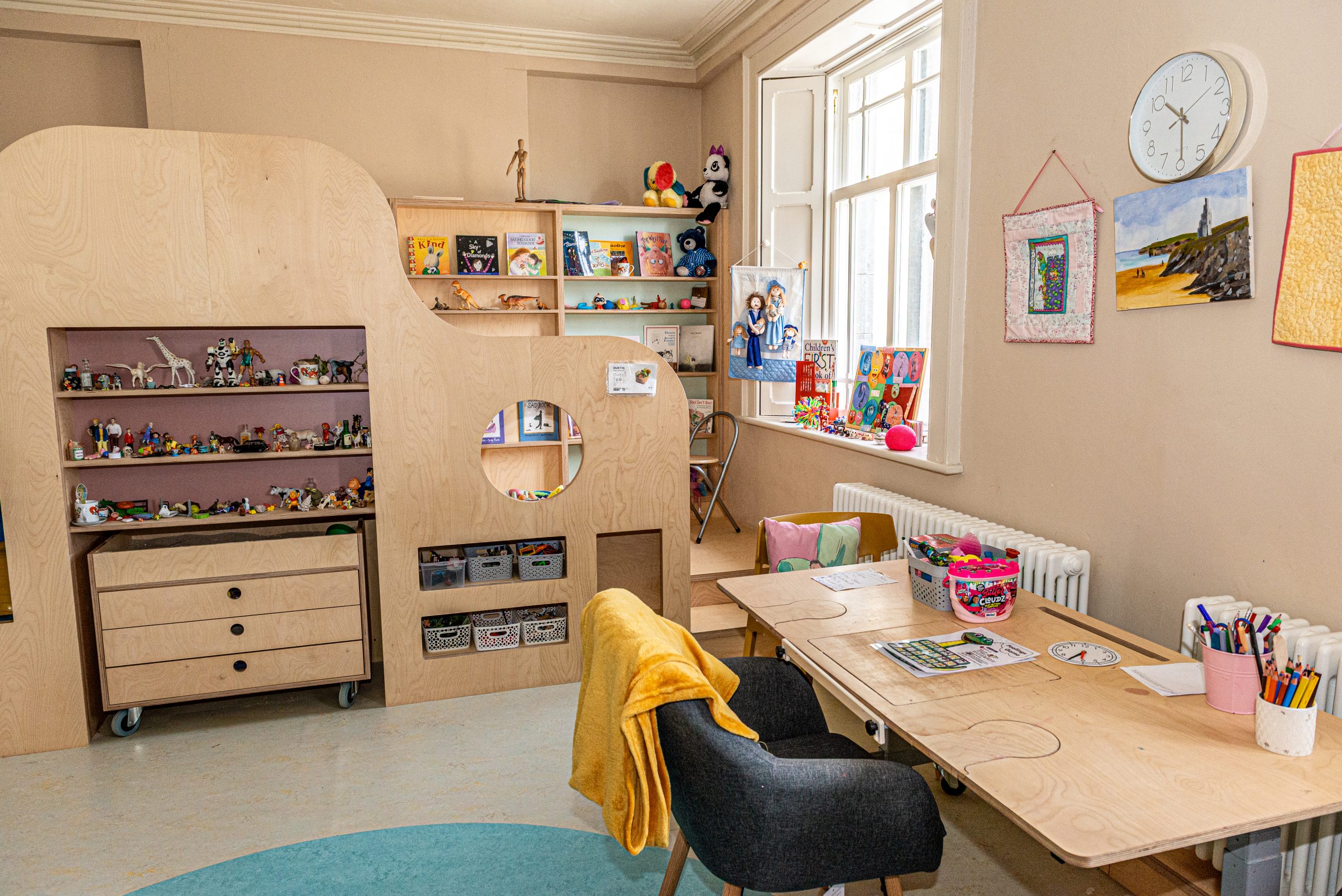
Your child meets with a Support Worker on an individual basis. The Support Worker will help your child express his or her emotions in different ways, according to their stage of development as well as their own preferences. This can be through talking, creative play, painting, music, workbooks, clay, games and storybooks. We encourage self-expression and help children and young people to understand their situation. We are guided by the child as to how many sessions are required.

*We provide a confidential service. However, if it becomes apparent that a child may be at risk of harm to themselves or from others, we are obligated to act in line with national child protection guidelines, which may require us to share relevant information.

Bereavement One-to-One Support

Obviously children vary in their emotional and behavioural responses to the death of a parent – their reactions being very much influenced by those around them. While most manage to grieve in a healthy way, around one-third of children may exhibit risk for high levels of emotional and behavioural problems during the first two years after the bereavement. (Worden, 1996).

By offering children who have suffered a loss in their lives a ‘listening space’, we can help children feel heard. Through talking, they are able to better understand the situation and learn that others share similar experiences. Through the one-to-one sessions, a bereaved child can start to accept their feelings as normal, can verbalise and address their fears and find a new sense of safety in the world.

Separation and Divorce One-to-One Support

When parents separate, it can be difficult for children to believe that the situation is permanent. They often wish that their parents may re-unite and may spend time thinking about how they can facilitate this. This means the loss is not made real, delaying healthy mourning. If there are conflicts in the home, a child may not feel it is ‘ok’ to grieve the parent, sometimes children feel that they are somehow to blame for the break-up. At our sessions, children are able to talk freely and openly about these feelings – in a safe environment, without fear of being judged or having to ‘take sides’.


Community Education

To provide support within the community

We arrange talks and workshops for people and professionals who specifically address the issues of grief and loss in their work with children and young people.

Teacher Support

Education programme for primary school teachers

We provide an education programme for primary school teachers in the mid-west region, helping them to assist children who are coping with the loss of a loved one through death or separation/divorce.

Click on the link below to purchase our toolkit About Death

https://buy.stripe.com/14AfZgdID7P71Ose8608g0c

Waiting List

The Children’s Grief Centre has seen over 2000 children ranging from 4 to 18 years.

The Centre has a waiting list, please use our Contact Form to request support